



 Français
 Español
 Deutsch
Content
Back sleepers ask very little of a pillow, yet most pillows still fail them. The spine has a gentle inward curve at the neck, and when the head rests too low or too high, that curve is flattened or exaggerated. Anyone who has woken with a stiff neck knows the feeling: the pillow was not shaped for the way they sleep.
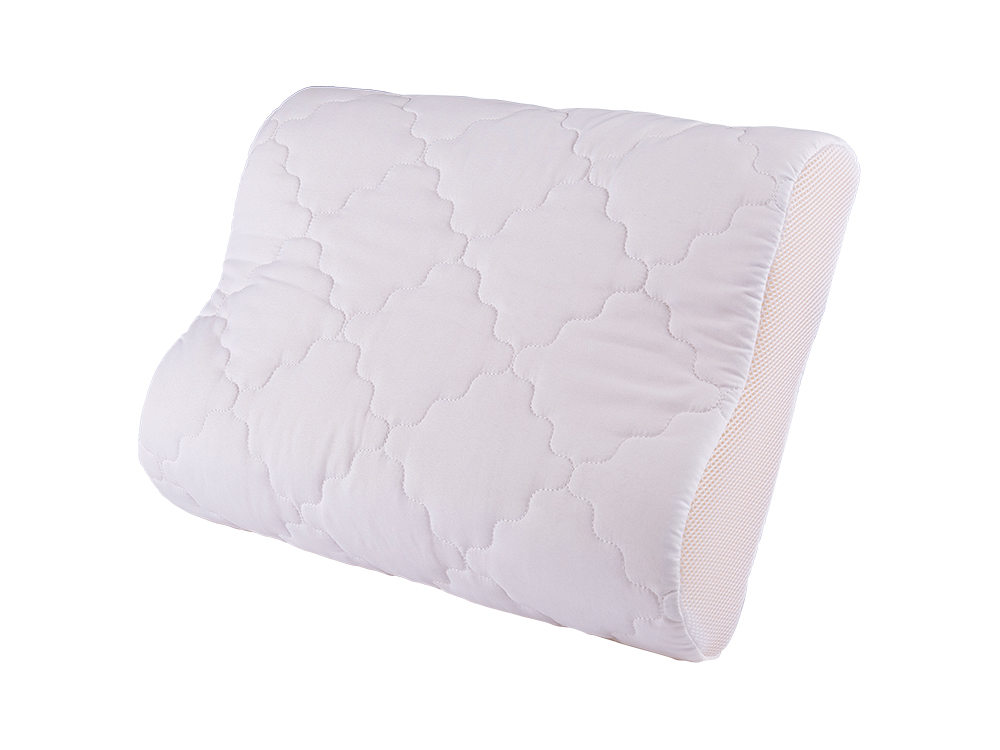
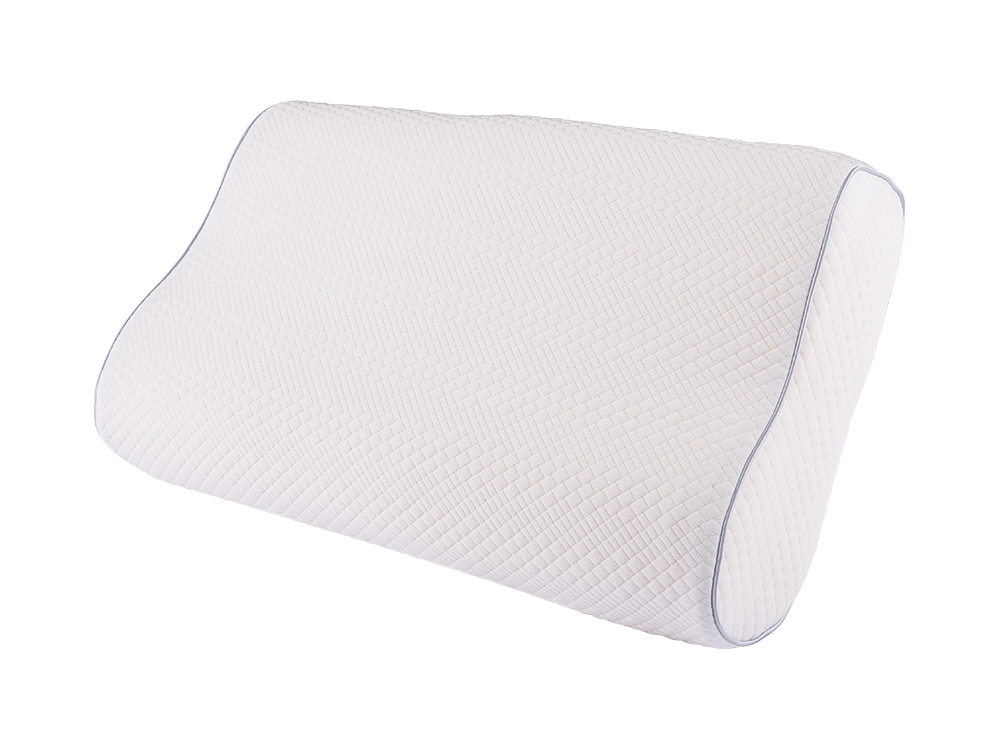
A contoured pillow solves the problem through geometry rather than guesswork. Instead of one uniform block of fill, the surface is shaped to hold the head, cradle the neck, and leave space for the shoulders. For someone who sleeps on their back, that shape is the whole point.
Xinlong Bedding has been producing pillows, quilts, mattress protectors, and blankets in Tongxiang since 2002, and in that time we have watched the one-shape-fits-everyone approach give way to a far more segmented market. Our household textile manufacturing background has taught us that contour is an engineering question first and a marketing story second. Here is what makes a contoured pillow work for back sleepers, and what buyers should specify before ordering.
Why Back Sleepers Benefit From a Contoured Pillow
When you lie on your back, the head, neck, and upper spine should form a straight line from the side, with a small natural arch at the neck. A pillow that is too flat lets the head drop backward and stretches the cervical muscles. One that is too high pushes the chin toward the chest, compressing the front of the neck and narrowing the airway.
A contoured pillow holds the head at a height that preserves the arch while supporting the neck itself. That second part matters: the neck needs contact, not just elevation. A conventional pillow tends to touch the head and the top of the shoulders while the neck hangs in the gap between them.
Back sleepers also need a shallower head cradle than side sleepers. The shoulder does not push the pillow upward in the same way, so a height that works on your side is usually too tall on your back. A contour built for one posture rarely performs well in another.
How a Contoured Pillow Is Built
The Two-Lobe Profile
The classic design pairs a raised edge, or lobe, that sits under the neck with a lower central dip that cradles the back of the head. Some versions add a taller second edge so the pillow can also serve side sleepers. Materials change; the geometry does not, because it follows the same anatomy.
Loft Height and Shoulder Width
Loft is the measurable part of comfort. An average adult back sleeper is usually comfortable with a neck lobe of roughly 9-11 cm and a head cradle of 6-8 cm, but shoulder width, mattress firmness, and personal preference all shift that range. A soft mattress lets the body sink and effectively reduces the loft needed; a firm one does the opposite.
| Contour profile | Head cradle loft | Neck lobe loft | Best suited to |
|---|---|---|---|
| Classic two-lobe | 6-8 cm | 9-11 cm | Average adult back sleepers |
| Low-profile contour | 5-6 cm | 7-8 cm | Petite frames and stomach sleepers |
| High-lobe contour | 8-10 cm | 11-13 cm | Broad shoulders and combination sleepers |
| Cervical roll cushion | Not applicable | 8-10 cm | Travel and targeted neck support |
If you are still weighing how loft affects neck comfort, our notes on flat pillows and neck alignment explore the trade-offs between low and high profiles.
Fill Density and Firmness
A contour only holds its shape when the fill resists the weight of a head without collapsing. With memory foam, that property is expressed as density and indentation load deflection, or ILD. With polyester fiber, it comes down to fill weight and the way the fibers are opened and blended. Both routes work, but they demand different tolerances on the production line.
Choosing the Right Fill and Cover
Memory foam remains the most popular choice for contoured pillows because it conforms slowly and distributes pressure instead of pushing back. A soft foam feels luxurious at first touch but may not hold the neck lobe; a firmer formulation supports better but can feel unyielding to sleepers who shift during the night.
Polyester fiber brings different advantages: lighter weight, easier washing, lower cost, and the option of blending hollow fibers for extra resilience. Cotton fill breathes well and appeals to buyers seeking natural materials, though it compresses over time and needs a denser fill to keep its contour.
Covers deserve the same attention as fill. A stretch knit follows a foam surface without wrinkling, while a woven cotton cover feels cooler and more substantial. Zippers, piping, and quilted outer layers all change the feel and the price, so specify them early rather than adding them at the end.
 Memory Foam Pillow ManufacturersVarious Types of Synthetic Fiber 3D Knitted FabricView Product →
Keeping a Contoured Pillow Cool
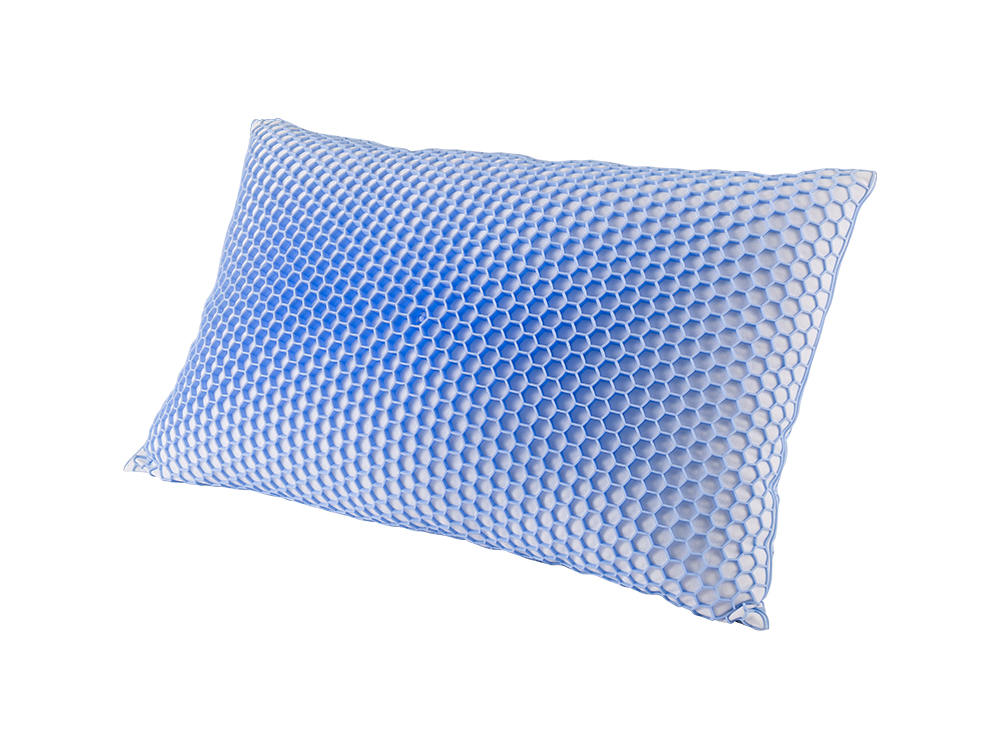
Memory foam has one well-known weakness: it retains heat. Back sleepers often stay in one position for long stretches, so warmth can build up through the night. Manufacturers address this with gel infusion, ventilated foam structures, phase change materials in the cover, and open-knit fabrics that move air more freely.
Cooling performance can be tested rather than assumed. A thermal reading after thirty minutes of contact, or a side-by-side comparison under identical conditions, gives buyers more confidence than a specification sheet alone. In hot, humid markets, this feature often decides whether a product sells through.
 Summer Cool Pillows ManufacturersVarious Types of Synthetic Fiber 3D Cooling Knitted Fabric, Various Types of Cooling Elastic Knitted FabricView Product →
What B2B Buyers Should Specify Before Ordering
Contoured pillows are rarely generic. The shape, loft, and firmness that suit one brand's customers can be completely wrong for another's, so a clear specification sheet prevents expensive assumptions. At minimum, it should cover the following points.
- Finished dimensions, including length, width, and the height of each lobe.
- Fill type, density or fill weight, and the target ILD or firmness range.
- Cover fabric composition, weight in grams per square meter, and whether it is removable.
- Color, label, hangtag, and packaging requirements, including compression ratio for shipping.
- Certification needs such as OEKO-TEX, GRS, or BSCI, and the documents required at delivery.
- Sampling schedule, minimum order quantity, lead time, and inspection criteria.
One practical tip from our production floor: approve a physical sample, not a photograph. A 2 cm difference in lobe height is invisible in an image but immediately obvious to someone lying down.
Neck Support Pillows ManufacturersVarious Types of Synthetic Fiber 3D Knitted Fabric, Various Types of Elastic Knitted FabricView Product →Quality, Compliance, and Care
Pillows rest against the skin for eight hours a night, so material safety matters as much as comfort. We operate within ISO9001 and ISO14001 systems and hold OEKO-TEX, GRS, and BSCI certifications, covering product safety, recycled content, and social responsibility in the supply chain. Buyers entering European or North American markets usually need at least the first of these before a listing can go live.
Care instructions should be settled during development. Memory foam cores generally cannot be washed and rely on a removable, washable cover, while polyester-filled contours can often be washed whole if the fiber is properly stabilized. Compression packaging saves freight but requires recovery time, so buyers should know how many hours a pillow needs to reach full loft.
Common Mistakes to Avoid
- Choosing loft by appearance rather than by mattress firmness and body size.
- Assuming one contour suits back, side, and stomach sleepers equally well.
- Specifying foam density without testing how the pillow recovers after compression.
- Ignoring heat retention in markets with hot, humid summers.
- Leaving cover construction and labeling until after the foam is approved.
- Skipping the sample stage to save a few weeks, then paying for it in returns.
A contoured pillow for back sleepers is a small product with a surprising number of variables behind it. Get the neck lobe, head cradle, fill behavior, and cover right, and the pillow disappears into a good night's sleep, which is exactly what it should do.
Whether you are developing a new private-label line or refining an existing one, we are glad to talk through shapes, materials, and certifications. Send us your specification, and we will tell you honestly what is straightforward and what needs testing.


 +86-573-88798028